What data links do states need to effectively monitor and diagnose their teacher supply challenges?
Many schools struggle to recruit and retain high-quality teachers. This problem is widely recognized but incompletely understood. One reason: state data systems often have blind spots that make it difficult to pinpoint where teacher shortages exist and why. For example, states often lack systematic information about the roots of shortages in the early stages of the teacher pipeline—when people first consider teaching.
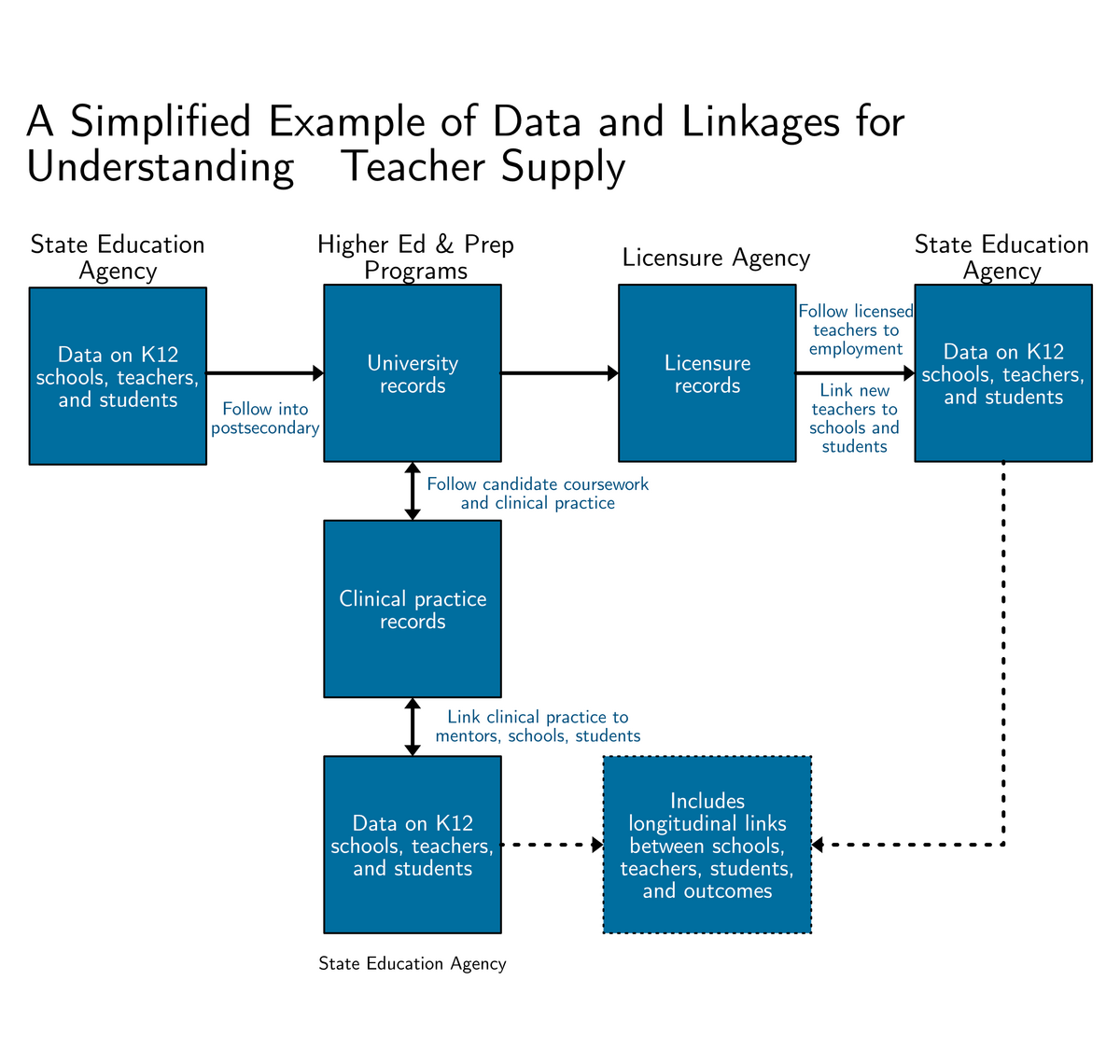
This chart spotlight sketches how a more comprehensive data system can provide a fuller picture of teacher supply. The key characteristic of the system is the ability to track individual-level data (using unique identifiers) on the path to becoming a teacher—from high school into postsecondary education, through teacher preparation and clinical practice, into licensure, and finally, employment as a classroom teacher.
A system with these data links would give policymakers a more complete picture of statewide teacher supply, including how it varies across schools, subjects, and places. Without connected supply data, leaders risk making data-thin decisions that respond to vague concerns—such as generalized “teacher shortages”—and missing more acute and actionable problems, like subject-specific gaps, regional disparities, or prep programs attrition.
Go Deeper. For more on how states can build these systems and use them to support real-world decision-making, see Leveraging State Data to Better Understand Current and Future Teacher Supply, a CALDER brief about how states can use statewide longitudinal data systems (SLDS) to understand their teacher supply problems and assess initiatives designed to address them.